
Trump Says He'd 'Love' to See United Ireland Now
US President Donald Trump endorses Irish unification during Ireland visit, stating it 'may as well happen now' and prompting UK government response.
Trump's Support for Irish Unification Sparks International Debate
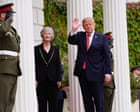
During an official visit to the Republic of Ireland, Donald Trump expressed his support for a united Ireland, declaring he would "love" to see the island reunified. The US President's remarks represent a significant intervention in Irish constitutional matters, suggesting that unification "may as well happen now" rather than at some point in the future. This unexpected endorsement of united Ireland has reignited discussions about the political status of the island and its divisions.
Timing and Context of Trump's Statement
The American leader made these comments at the beginning of a two-day official visit to Ireland on Saturday. Trump's position on united Ireland appeared to signal tacit support for those advocating for constitutional reform across the island. The intervention came without prior diplomatic coordination and caught political observers off guard, particularly given the sensitive nature of such statements regarding Irish sovereignty and partition.
International Reactions to Trump's Position
Trump's endorsement of united Ireland prompted immediate and forceful responses from key international actors. The UK government swiftly rebutted the President's comments, emphasizing the established constitutional frameworks governing the relationship between Northern Ireland and Great Britain. Northern Ireland's unionist political leaders also responded quickly, defending the current constitutional arrangement and rejecting implications that unification should proceed imminently.
United Ireland: Historical Context and Current Debate
The question of united Ireland remains one of the most complex political issues on the island. The partition of Ireland in 1921 created the Irish Free State, which later became the Republic of Ireland, and Northern Ireland, which remained part of the United Kingdom. For over a century, various political movements have advocated for ending this partition and creating a single unified state across the entire island. Trump's comments suggest he views unification as an inevitable outcome that could accelerate sooner rather than later.
Political Implications for Ireland and the UK
The unexpected nature of Trump's intervention in Irish constitutional matters raises questions about American foreign policy toward the British Isles. While the US maintains close relationships with both Ireland and the United Kingdom, direct presidential statements supporting specific constitutional changes in another nation are relatively rare. The President's apparent backing for united Ireland may influence ongoing political conversations within Irish nationalist circles while simultaneously alarming unionists who oppose any constitutional changes to Northern Ireland's status.
Response from Irish and British Officials
Irish government officials were placed in a delicate position following Trump's remarks. While many Irish citizens and political figures support the concept of united Ireland, official government responses have traditionally maintained diplomatic caution regarding such sensitive matters. The UK's swift rejection of Trump's position reaffirmed London's commitment to the constitutional framework established through the Good Friday Agreement, which allows for a potential future referendum on Irish unification subject to specific conditions.
The Good Friday Agreement Framework
The Good Friday Agreement, signed in 1998, established a carefully balanced framework for addressing the question of Irish unity. Under this international accord, a referendum on united Ireland could theoretically be held if the Secretary of State for Northern Ireland determines that a majority of the population would support unification. The agreement respects the principle of consent, meaning any constitutional change requires popular support from those living in Northern Ireland. Trump's suggestion that unification "may as well happen now" appears to sidestep these established procedures and international agreements.
Trump's Visit and Broader US-Ireland Relations
The US President's two-day visit to Ireland included various official engagements and discussions. While his comments regarding united Ireland captured significant media attention, the visit also encompassed other diplomatic objectives and cultural events. The trip highlighted the deep historical and cultural connections between the United States and Ireland, with millions of Americans claiming Irish ancestry.
Future Political Discourse on Irish Unification
Trump's statement will likely continue to influence political discussions about united Ireland in coming months. His endorsement may energize nationalist movements advocating for constitutional change, while simultaneously strengthening resolve among unionists to resist such changes. The intervention demonstrates how international political figures can inadvertently shape local political debates, even when such interventions occur outside formal diplomatic channels.