
Trump Scales Back Military Drills with South Korea Following Iran Conflict Decision
Trump announces reduction in US-South Korea military exercises, citing his strong relationship with North Korea's leader as key factor in strategic decision.
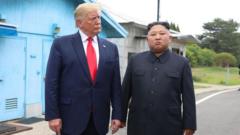
Trump Announces Reduction in Military Exercises with South Korea
The Trump administration has declared its intention to scale back military drills with South Korea, marking a significant shift in defense cooperation between the two allied nations. This decision comes as part of broader strategic considerations involving regional stability and diplomatic relationships across East Asia. Trump military drills South Korea represent a cornerstone of bilateral security arrangements, and the announced reduction signals evolving priorities in US foreign policy.
Strategic Rationale Behind the Decision
President Trump has emphasized his "very good relationship" with North Korea's leader as a central factor influencing this policy adjustment. The president cited this diplomatic connection as instrumental in determining the scope and scale of future military exercises between Washington and Seoul. Rather than viewing defense cooperation through traditional security lenses, the administration appears to be weighing diplomatic engagement as an alternative framework for regional peace.
The reduction in joint military operations reflects an unconventional approach to Korean peninsula security. By potentially de-escalating military demonstrations, the Trump administration seeks to create conditions for sustained dialogue with Pyongyang. This strategy diverges from previous administrations' emphasis on maintaining robust military presence and readiness on the peninsula.
Implications for US-Korea Defense Relationship
US Korea defense exercises have historically served as critical demonstrations of military commitment and deterrence capability. These joint operations have involved tens of thousands of troops, advanced weaponry, and sophisticated coordination between American and South Korean forces. The decision to downsize these activities raises questions about the future trajectory of bilateral security arrangements.
South Korea, a key ally in Northeast Asia, maintains significant security concerns regarding North Korean military capabilities. The scaling back of joint military drills may necessitate reassurance measures from Washington to maintain confidence in security guarantees. Strategic communication becomes increasingly important as military exercises are reduced.
Trump North Korea Relations and Diplomatic Engagement
The president's characterization of his relationship with North Korea's leadership underscores a dramatic shift from confrontational rhetoric witnessed in earlier periods. This rapprochement, however tentative, represents an attempt to pursue denuclearization through diplomatic channels rather than military pressure. The decision regarding military drills reflects this broader diplomatic philosophy.
Trump's approach prioritizes direct engagement with North Korean leadership, viewing personal relationships as conducive to breakthrough negotiations. By reducing military exercises, the administration signals willingness to adjust tactical approaches in service of broader strategic objectives. However, this strategy remains controversial among defense analysts and regional security experts.
Regional Security Considerations
The military cooperation reduction carries implications extending beyond bilateral US-South Korea relations. Japan, another regional ally, closely monitors developments affecting Northeast Asian security architecture. The balance of power on the Korean peninsula has long served as a pillar of regional stability, and any significant changes warrant careful calibration.
Military readiness and interoperability require consistent training and joint exercises. Reducing the frequency and scope of these operations may impact the operational effectiveness of combined forces should contingencies arise. Defense planners must weigh diplomatic benefits against potential security costs.
Future Outlook for Defense Strategy
The Trump administration's commitment to scaling back military drills signals potential transformation in how the United States approaches alliance management in East Asia. Rather than emphasizing military deterrence through visible demonstrations of strength, this approach emphasizes diplomatic engagement and confidence-building measures. The effectiveness of this strategy will ultimately depend on corresponding actions from North Korea.
South Korea faces the challenge of maintaining defense preparedness while accommodating Washington's diplomatic priorities. The country must balance its own security concerns with support for broader US engagement efforts. This balancing act will define the future of US South Korea defense strategy.
As military exercises decrease, enhanced intelligence sharing, cyber defense cooperation, and other security measures may become increasingly important. The reduction in traditional military drills does not necessarily diminish overall defense commitment, but rather reflects evolving security paradigms in the region. Observers will closely monitor whether this approach yields tangible progress in denuclearization negotiations and regional stability improvements.