
Ukraine Strikes Strategic Oil Terminal Near St. Petersburg
Ukraine targets major oil terminal near St. Petersburg, hitting key Russian infrastructure. Zelensky confirms strike on facility generating revenue for Russia's...
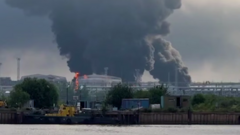
Ukraine Carries Out Major Strike on Russian Oil Terminal
Ukrainian forces have executed a significant Ukraine oil terminal strike targeting a major petroleum facility located near St. Petersburg, according to official statements from Kyiv authorities. President Volodymyr Zelensky confirmed the operation, emphasizing that the targeted infrastructure represents a critical economic asset for Russia's military operations.
The assault on this strategic energy facility marks another escalation in Ukraine's campaign against Russian infrastructure that directly finances Moscow's ongoing military activities. The Ukraine oil terminal strike represents a calculated effort to disrupt the financial mechanisms supporting Russia's war machine, attacking economic targets rather than purely military installations.
Zelensky Confirms Strategic Importance of the Target
Ukrainian President Zelensky underscored the significance of the operation, characterizing the oil terminal as essential infrastructure that "generates revenue for Russia's war." This statement reveals Ukraine's strategic approach of targeting facilities with direct economic consequences for the Kremlin's military expenditures.
The terminology used by Zelensky reflects a broader Ukrainian strategy focusing on economic attrition rather than conventional warfare alone. By targeting revenue-generating infrastructure, Ukraine aims to constrain Russia's ability to finance military operations and sustain its war effort over an extended period.
The Role of Energy Infrastructure in Financing Military Operations
Russia's petroleum sector constitutes a substantial revenue source for the state budget, particularly during wartime when military expenditures consume an increasing proportion of government resources. Oil exports and domestic energy sales provide Moscow with foreign exchange and domestic funding necessary to maintain its military campaign.
This Ukraine oil terminal strike reflects Kyiv's recognition of energy infrastructure as a legitimate military-economic target. By disrupting oil production, storage, and distribution capabilities, Ukrainian forces attempt to directly impact Russia's capacity to finance military activities, weapons procurement, and troop maintenance.
Strategic Context of Ukrainian Attacks on Russian Infrastructure
Ukraine has consistently pursued a strategy of targeting Russian economic infrastructure throughout the conflict, particularly facilities with dual civilian-military purposes. These operations aim to increase the economic costs of Russia's military aggression while degrading the financial foundation supporting sustained military operations.
The focus on St. Petersburg facility operations demonstrates Ukraine's willingness to conduct operations deep within Russian territory, challenging Moscow's claims of territorial security and domestic stability. Such strikes carry significant symbolic weight, demonstrating that no Russian infrastructure lies beyond potential Ukrainian reach.
International Implications and Precedent
Ukrainian military operations against Russian energy infrastructure have generated international attention and debate regarding military strategy, international law, and proportionality in conflict. While some nations recognize Ukraine's right to target infrastructure supporting military operations, others express concern about potential humanitarian consequences.
The Ukraine Russia conflict continues to evolve tactically, with both nations adapting strategies to address perceived vulnerabilities. Ukraine's emphasis on economic disruption represents an asymmetrical approach, compensating for numerical and technological disadvantages through strategic targeting of high-value civilian infrastructure with direct military applications.
Long-Term Strategic Considerations
This operation fits within Ukraine's broader campaign to make the continuation of war economically unsustainable for Russia. By systematically targeting revenue-generating infrastructure, Ukrainian military planners seek to impose cumulative economic damage that eventually constrains Moscow's military capabilities.
The Zelensky military operation exemplifies how modern conflicts increasingly blur traditional distinctions between military and economic targets. Energy infrastructure, historically considered primarily civilian in nature, now occupies a contested space between legitimate military objectives and civilian assets, depending on strategic analysis and legal interpretation.
As the Ukraine oil terminal strike demonstrates, the conflict continues to escalate in sophistication and scope, with both combatants employing increasingly complex strategies targeting the enemy's fundamental capacity to sustain military operations. President Zelensky's confirmation of the operation's strategic purpose reveals Ukraine's calculated approach to warfare, emphasizing economic denial as a crucial component of its defensive strategy against Russian aggression.