

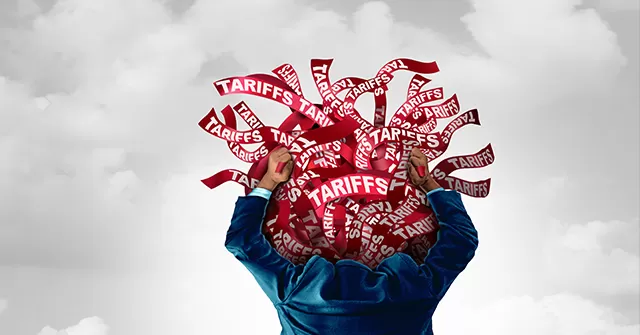

One of the biggest challenges for economists is predicting the behavior of American households. Despite the use of complex models and data analysis, economists continue to be surprised by the actions of American consumers. This has become even more evident in recent times, with the ongoing trade war and the implementation of tariffs by the United States government.
The latest data from the Bureau of Economic Analysis shows that the US economy grew at an annual rate of 2.1% in the second quarter of 2019, which was higher than expected. This growth was largely driven by consumer spending, which accounts for about two-thirds of the US economy. However, this growth has not been consistent across all sectors, with some industries experiencing a decline in sales and profits.
One of the main reasons for this inconsistency is the unpredictable behavior of American households. Economists rely on models that assume consumers will react in a certain way to changes in the economy. However, American households have been stubbornly refusing to follow these expected patterns, leading to surprises and challenges for economists.
One of the key factors contributing to this unpredictability is the ongoing trade war between the US and China. The implementation of tariffs by the US government has had a significant impact on the economy, with some industries being hit harder than others. For example, the agriculture sector has been heavily affected by retaliatory tariffs from China, leading to a decline in exports and profits for farmers.
However, despite the challenges faced by certain industries, American consumers have not significantly changed their spending habits. This has been a surprise to economists, who expected consumers to cut back on spending due to the impact of tariffs on the economy. Instead, consumer spending has remained strong, contributing to the overall growth of the economy.
This unexpected behavior of American households can also be seen in the housing market. Despite the Federal Reserve cutting interest rates, which typically leads to an increase in home sales, the housing market has been sluggish. This is due to a combination of factors, including rising home prices and a shortage of affordable housing. This has once again defied the expectations of economists, who predicted a surge in home sales following the interest rate cut.
So why are American households not behaving the way economists expect? One possible explanation is that consumer confidence remains high, despite the uncertainty caused by the trade war. The latest consumer sentiment index from the University of Michigan shows that consumers are still optimistic about the economy and their personal finances. This could be due to the strong labor market, with low unemployment and rising wages, giving consumers the confidence to continue spending.
Another factor to consider is the changing demographics of American households. Millennials, who now make up the largest generation in the US, have different spending habits compared to previous generations. They are more likely to prioritize experiences over material possessions, and are also more conscious of their spending habits. This could explain why certain industries, such as retail, have been struggling while others, such as travel and leisure, have seen growth.
In conclusion, the unexpected behavior of American households has been a challenge for economists, especially in the current economic climate. The ongoing trade war and the implementation of tariffs have added to this unpredictability, with consumers defying expectations and continuing to spend. However, this behavior could also be a sign of a strong and resilient economy, with consumers remaining confident despite external factors. As economists continue to grapple with this unpredictability, it is important to consider the changing dynamics of American households and their impact on the economy.