
Dover vigilantes warn of fresh blockades without police action
Far-right linked activists threaten renewed Dover disruptions. Campaigners urge authorities to intensify enforcement against Patriot Platform protests.
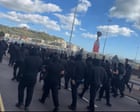
Dover Vigilantes Threaten Return Unless Law Enforcement Intervenes
Black-clad masked individuals who orchestrated road blockades at Dover's port have indicated they may replicate such actions if police fail to implement stronger preventative measures, according to prominent activists and elected officials. The Dover vigilantes operation highlighted a significant security concern, prompting calls for enhanced government response to prevent future incidents of similar scale and disruption.
Anti-Immigration Group Claims Responsibility
The coordinated blockade has been attributed to Patriot Platform, an anti-immigration faction with documented connections to far-right movements. The organization describes itself as embodying a commitment to national interests, framing their interventions around what they term a "fierce love for our homeland." This characterization reflects broader ideological positioning within contemporary protest movements centered on immigration policy opposition.
Campaigners Cite Police Inaction
Hope Not Hate, a prominent civil rights organization, has released statements asserting that the group's capacity to mobilize and coordinate activities at scale stems directly from insufficient police intervention strategies. The founder of Hope Not Hate emphasized that without aggressive law enforcement countermeasures, such organizations will continue leveraging public disruption as a tactical tool. This assessment underscores growing concerns about extremist group organizational capabilities in the United Kingdom.
The Nature of Disruption at Dover Port
The demonstration in question involved coordinated road blockades designed to attract maximum media attention and public awareness. Participants dressed uniformly in dark clothing and masks, creating a visually unified presentation that emphasized group identity and organizational discipline. Such visual uniformity has become a hallmark characteristic of modern protest movements seeking to project strength and cohesion. Dover vigilantes maintained their positions despite law enforcement presence, demonstrating both determination and organizational preparation.
Political Response and Enforcement Calls
Multiple politicians have responded to these events by demanding accelerated police action against extremist mobilization. Elected representatives from the Dover constituency have expressed alarm at the precedent established by successful road blockades, noting that permitting such actions without consequential enforcement could normalize similar tactics. The threat of repetition has galvanized political pressure on local and national police leadership to demonstrate measurable enforcement responses.
Far-Right Connections and Organizational Structure
Patriot Platform maintains demonstrable links to broader far-right networks within the United Kingdom, though the organization positions itself as a mainstream advocacy group. Intelligence analysts and civil society organizations have documented historical connections between platform leadership and established far-right figures, raising questions about the organization's true ideological orientation. The anti-immigration messaging serves as the primary recruitment and mobilization tool, framing opposition to government immigration policy as an urgent national imperative.
Escalating Pressure on Law Enforcement
Kent Police have faced intensified scrutiny regarding their response protocols and preventative capabilities. The blockade's successful execution, despite apparent police awareness of planned activities, has prompted investigations into operational procedures and intelligence-gathering effectiveness. Critics argue that police resource allocation may be insufficient to address emerging extremist protest coordination, particularly regarding groups capable of mobilizing supporters rapidly across geographic regions.
Strategic Implications and Future Vigilance
The Dover vigilantes incident illustrates evolving protest methodologies employed by far-right and anti-immigration movements. The tactical deployment of visual uniformity, coordinated timing, and strategic location selection demonstrates organizational sophistication. Law enforcement agencies have consequently elevated alert status regarding potential repetitions, though resources remain contested. Activists and politicians alike warn that without demonstrable enforcement consequences, Patriot Platform and similar organizations will view successful disruption as justification for future actions.
Civil Society Response
Organizations opposing extremism have mobilized counter-narratives and awareness campaigns highlighting the dangers posed by anti-immigration activism. Public statements from Hope Not Hate and allied groups emphasize that police inaction effectively enables such movements by signaling permissiveness toward their tactical approaches. This dynamic creates pressure on elected officials to demand stringent enforcement without appearing politically partisan regarding protest activities.
Ongoing Monitoring and Assessment
Security analysts continue assessing whether Dover vigilantes represent an isolated incident or the beginning of a sustained campaign. The organizational capacity demonstrated at Dover suggests potential for future coordinated actions across multiple locations, potentially targeting other ports or strategic infrastructure. Intelligence services have correspondingly heightened monitoring of Patriot Platform communications and leadership activities to anticipate and preempt further disruptions.