
France's Air Conditioning Debate Heats Up Amid Record Temperatures
France grapples with air conditioning policies after hitting record high temperatures, sparking political controversy over climate adaptation strategies and ene...
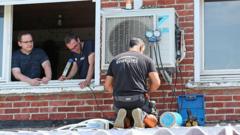
France Confronts Air Conditioning Crisis as Heat Records Shatter
The persistent heatwave sweeping across Europe has forced France to fundamentally reconsider its traditional stance on air conditioning technology. As the nation experiences unprecedented temperature records, the air conditioning debate has emerged as a surprisingly divisive political issue, revealing deep disagreements among policymakers, environmental advocates, and citizens about how best to respond to escalating climate challenges.
Historical Opposition to Cooling Systems
France has long maintained a cautious approach toward widespread adoption of air conditioning units throughout residential and commercial buildings. This conservative position stemmed from environmental consciousness and the belief that natural ventilation combined with architectural design could adequately manage summer heat. The air conditioning question was rarely contested at the national policy level, representing a point of relative consensus among French stakeholders.
However, the recent temperature extremes have shattered this long-standing agreement. Citizens across the nation are increasingly questioning whether traditional cooling methods remain viable in an era of intensifying climate volatility. The air conditioning industry has capitalized on these concerns, presenting mechanical cooling as an essential adaptation strategy rather than a luxury amenity.
The Political Divide Emerges
Environmental groups worry that expanding air conditioning infrastructure would increase electricity consumption and carbon emissions, contradicting France's renewable energy objectives. Progressive politicians argue that investment in building insulation, green roofs, and reflective surfaces offers superior long-term solutions to mechanical cooling dependency.
Conversely, conservative lawmakers and business leaders contend that air conditioning represents a pragmatic response to immediate health threats posed by extreme temperatures, particularly affecting vulnerable populations including elderly residents and those with chronic health conditions. They argue that rejecting proven cooling technology amounts to prioritizing ideology over public welfare.
Public Health and Safety Considerations
France's public health authorities have issued stark warnings about heat-related mortality. During recent extreme weather events, emergency services reported unprecedented numbers of heat-related hospitalizations, prompting medical professionals to advocate for broader air conditioning availability as a critical public health measure.
The Ministry of Health has begun examining policies that would incentivize air conditioning installation in medical facilities, elderly care centers, and vulnerable community spaces. This approach attempts to balance environmental concerns with immediate survival needs, though environmental advocates remain skeptical about expansion beyond essential institutions.
Economic and Energy Infrastructure Questions
Industrial analysts warn that France's electrical grid faces significant strain if air conditioning demand increases substantially during peak summer months. The nation generates considerable electricity through nuclear power plants, which themselves require cooling water, creating potential bottlenecks during extreme heat events.
Energy efficiency standards have become central to the air conditioning discussion. Policymakers increasingly focus on developing building codes requiring high-efficiency units combined with superior insulation rather than blanket approvals for cooling technology. This nuanced approach seeks middle ground between environmental protection and practical necessity.
International Comparisons and Solutions
French officials have studied cooling strategies implemented by Mediterranean and Southern European nations that have managed high temperatures with mixed approaches combining technology and urban design modifications. Cities like Barcelona and Lisbon have demonstrated that strategic tree planting, water features, and light-colored surfaces can substantially reduce urban temperatures without relying exclusively on air conditioning systems.
These models have informed emerging French policy discussions emphasizing integrated climate adaptation rather than single-solution approaches. Urban planners increasingly propose comprehensive strategies addressing building design, public space modification, and limited technological cooling rather than encouraging residential air conditioning proliferation.
The Path Forward
France faces a critical juncture in determining its climate adaptation strategy. The air conditioning debate ultimately reflects broader questions about technological reliance, environmental responsibility, and human survival in an increasingly unpredictable climate. Coming legislative sessions will likely produce compromise solutions acknowledging both environmental imperatives and public health requirements, establishing middle-ground policies governing air conditioning expansion while maintaining commitment to renewable energy development and sustainable urban design.