
Hamas Disarmament Plan Encounters Significant Challenges Despite Offering Gaza Hope
Explore the complex Hamas disarmament plan that presents obstacles but offers rare hope for Gaza's future amid political and military realities.
Hamas Disarmament Plan: Navigating Complex Obstacles Toward Peace
A comprehensive Hamas disarmament plan has emerged as a potentially transformative yet deeply challenging pathway for Gaza's future, despite the numerous obstacles that threaten its implementation. This ambitious initiative represents one of the most significant diplomatic efforts to address the underlying causes of regional instability, though political realities, military considerations, and decades of mutual distrust create formidable barriers to success.
The Hamas disarmament plan requires unprecedented cooperation between multiple stakeholders with conflicting interests and deeply entrenched positions. The fundamental challenge lies not merely in the technical logistics of weapons collection and decommissioning, but in establishing the trust mechanisms necessary for such a historically contentious arrangement to function effectively.
The Political Landscape: A Minefield of Competing Interests
The political dimension of any disarmament agreement presents perhaps the most intractable challenge. Years of conflict have created profound mistrust between all parties involved, making confidence-building measures extraordinarily difficult to implement. National governments, militant organizations, and civilian populations each hold divergent visions for the region's future, and these competing narratives must somehow be reconciled within a unified framework.
International actors further complicate the equation, each bringing their own geopolitical interests and strategic objectives to negotiations. The involvement of regional powers, global superpowers, and humanitarian organizations creates multiple pressure points that can either facilitate or derail progress toward a meaningful agreement.
The Toll of Conflict: Rebuilding from Devastation
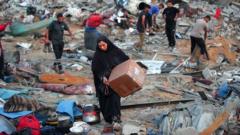
The extensive destruction inflicted upon Gaza during recent military operations has created humanitarian catastrophe on an unprecedented scale. Tens of thousands of lives have been lost, entire neighborhoods have been reduced to rubble, and essential infrastructure has been systematically damaged. This massive destruction forms the tragic backdrop against which any disarmament negotiations must occur.
The psychological and social scars running through Gazan society are equally profound. Communities experiencing such devastating loss harbor understandable skepticism toward peace initiatives that failed to prevent tragedy. Rebuilding trust and hope requires acknowledging this suffering while presenting a credible vision for genuine change.
Military Realities and Security Concerns
The military dimension of disarmament presents technical and strategic complications that must be addressed with precision and transparency. The scattered nature of weapons stockpiles, the existence of clandestine facilities, and the challenge of verifying compliance with international standards all demand sophisticated monitoring mechanisms.
Security arrangements must simultaneously address legitimate concerns from all parties: vulnerable civilian populations require protection, neighboring regions demand reassurance regarding stability, and participating entities need guarantees that they will not be targeted during vulnerable transitional phases. Achieving this balance requires creative diplomatic solutions and binding international guarantees.
A Rare Glimmer of Hope Amid Daunting Challenges
Despite these substantial obstacles, the Hamas disarmament plan offers something genuinely rare in Middle Eastern geopolitics: a concrete framework for transforming conflict into cooperation. The very existence of such a proposal demonstrates that even under the most difficult circumstances, leaders can envision alternatives to perpetual warfare.
This plan represents recognition that military dominance cannot provide lasting security or address the underlying grievances that perpetuate cycles of violence. Instead, it proposes structural changes that could fundamentally alter the region's trajectory toward stability and development.
Implementation Challenges and Verification Mechanisms
Translating diplomatic agreements into operational reality requires robust verification systems capable of monitoring compliance across complex, sometimes hostile environments. International observers, technical experts, and independent auditors would need unprecedented access and authority.
The practical logistics of collecting, cataloging, and safely disposing of weapons arsenals accumulated over decades presents enormous challenges. These processes must operate transparently while protecting the security of those involved in implementation.
Building Confidence Through Incremental Progress
Rather than expecting comprehensive agreement overnight, successful disarmament strategies typically proceed through carefully calibrated phases. Early successes in limited areas can build momentum and demonstrate good faith, gradually expanding cooperation as confidence increases.
Such phased approaches allow stakeholders to verify commitment while maintaining security throughout the transition period. Small victories accumulate psychological momentum, creating domestic political space for leaders to justify continued engagement with skeptical constituencies.
The Path Forward: Cautious Optimism
The Hamas disarmament plan, while facing monumental obstacles, represents genuine progress toward reconceiving relationships in this troubled region. Success remains uncertain, yet the existence of this framework itself constitutes meaningful hope for those seeking alternatives to endless conflict.