
Helium-3: The Lunar Resource That Could Power Our Future
Discover helium-3 properties, its growing demand, and why space agencies are planning ambitious lunar mining missions to extract this valuable resource.
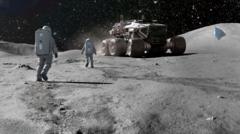
Understanding Helium-3 and Its Significance
Helium-3 is a rare isotope that has captured the attention of scientists, energy experts, and space agencies worldwide. Unlike its more common counterpart, helium-3 lunar mining represents a frontier in both energy production and space exploration. This lightweight noble gas possesses unique properties that make it exceptionally valuable for advanced nuclear fusion reactions and specialized industrial applications.
The fundamental difference between helium-3 and regular helium lies in its atomic structure. While helium-4 contains two protons and two neutrons, helium-3 contains two protons and only one neutron. This subtle but crucial distinction grants helium-3 remarkable nuclear fusion capabilities, positioning it as a potential game-changer in future energy production methodologies.
Why Helium-3 Is So Valuable
The demand for helium-3 continues to accelerate across multiple industries and research sectors. Medical imaging technologies, including MRI machines, rely heavily on helium-3 for cooling superconducting magnets. Beyond healthcare, aerospace programs, nuclear research facilities, and emerging fusion energy projects all require consistent supplies of this rare element.
Current terrestrial production of helium-3 remains limited and extraordinarily expensive. Most Earth-based helium-3 originates as a byproduct during the decommissioning of nuclear weapons or through the decay of tritium in laboratories. These sources cannot meet the projected global demand, which experts forecast will increase dramatically over the coming decades as fusion technology advances.
The Lunar Connection: A Revolutionary Mining Opportunity
The moon harbors vast untapped reserves of helium-3, making helium-3 lunar mining an increasingly attractive prospect for spacefaring nations and private enterprises. Solar winds have deposited substantial quantities of this isotope across the lunar surface over billions of years. Unlike Earth, which benefits from a protective magnetic field that deflects solar particles, the moon receives direct exposure to these helium-3-bearing stellar emissions.
Scientists estimate that the lunar regolith—the dusty surface layer—contains approximately one million metric tons of helium-3. This astronomical quantity would theoretically fulfill global energy demands for centuries if extraction and transportation technologies could be developed efficiently.
The Economics and Feasibility of Lunar Extraction
While the potential is tremendous, the economics of helium-3 lunar mining present significant challenges. Extracting helium-3 from lunar soil requires heating the regolith to approximately 600 degrees Celsius, causing the trapped helium-3 to be released as a gas that can then be captured and compressed. Establishing mining operations on the moon demands substantial infrastructure investments, including lunar bases, specialized extraction equipment, and transportation systems capable of returning extracted materials to Earth.
Despite these hurdles, several space agencies have begun formulating concrete strategies for lunar extraction operations. The economic viability hinges on reducing space transportation costs and developing automated mining systems that can function autonomously in the harsh lunar environment. As commercial spaceflight companies continue advancing rocket technology and reducing launch expenses, the financial barriers to helium-3 lunar mining continue diminishing.
Current Space Agency Plans and Future Prospects
Multiple government agencies and private companies are actively developing lunar mining capabilities. NASA's Artemis program aims to establish sustained human presence on the moon, which would provide the foundation for resource extraction initiatives. Chinese space authorities have similarly outlined comprehensive lunar exploration strategies that include resource assessment and potential extraction methodologies.
The timeline for commercial-scale helium-3 lunar mining remains uncertain, with experts suggesting that initial extraction operations could commence within two to three decades. However, as fusion energy technology matures and energy demands intensify globally, the urgency surrounding helium-3 procurement will likely accelerate these timelines.
Transforming Earth's Energy Future
The successful development of helium-3 lunar mining could fundamentally reshape global energy systems. Fusion reactors powered by helium-3 would produce abundant clean energy without the radioactive waste challenges associated with conventional nuclear fission. This technological advancement could address climate change concerns while meeting humanity's expanding energy requirements across industrial, residential, and transportation sectors.
As scientific understanding deepens and space exploration capabilities advance, helium-3 lunar mining transitions from theoretical speculation to practical engineering challenge. The race to secure this extraterrestrial resource represents not merely a technological achievement, but a potential catalyst for unprecedented global prosperity and sustainable energy abundance.