
Tech Innovation Aids Firefighters in Combating Wildfires
Discover how emerging technology enhances wildfire detection and firefighting operations. Learn why human firefighters remain essential in the battle against wi...
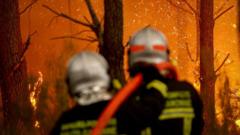
Technology as a Complementary Tool in Wildfire Management
Wildfire technology has emerged as a critical component in modern fire management strategies, yet the question of whether advanced systems can completely replace human firefighters remains firmly rooted in reality. While innovative surveillance and detection solutions provide unprecedented monitoring capabilities, the physical and strategic expertise of firefighters continues to be indispensable in combating these destructive natural disasters.
The integration of wildfire technology into fire prevention and response frameworks has fundamentally transformed how agencies detect, track, and respond to emerging threats. Satellite imagery, drone surveillance, artificial intelligence algorithms, and thermal imaging systems now work in concert to identify smoke signatures and fire outbreaks within minutes of their inception. This technological advancement has significantly reduced response times and enabled early intervention before wildfires escalate into catastrophic events.
Advanced Detection Systems Revolutionize Early Response
Modern fire detection technology represents a substantial leap forward in preventative measures. Automated camera networks stationed across vulnerable landscapes capture real-time footage analyzed by machine learning algorithms capable of detecting smoke with remarkable accuracy. These systems can alert command centers to potential fires sometimes before they become visible to the naked eye.
Satellite-based monitoring provides comprehensive coverage of remote regions where ground-based observation remains challenging. Weather satellites equipped with thermal sensors continuously scan vast territories, identifying heat signatures characteristic of active wildfires. Additionally, specialized infrared technology enables nighttime detection, ensuring 24-hour surveillance of high-risk areas.
Drone technology has revolutionized reconnaissance operations, allowing incident commanders to gather detailed real-time intelligence about fire behavior, spread patterns, and terrain challenges. This aerial perspective provides tactical information that substantially improves decision-making and resource allocation during active firefighting operations.
Why Firefighters Remain Essential in Wildfire Response
Despite remarkable technological advances, wildfire technology cannot replicate the critical capabilities that trained firefighters bring to emergency situations. The physical act of fighting fires, establishing firebreaks, controlling flame advancement, and protecting structures demands human presence, judgment, and tactical expertise that no automated system can fully replace.
Firefighters possess situational awareness that extends beyond sensor data. They evaluate rapidly changing environmental conditions, assess structural integrity, determine evacuation routes, and make split-second decisions that affect lives and property. Their experience enables them to recognize patterns invisible to algorithms and adapt strategies based on terrain, vegetation density, and atmospheric conditions that evolve throughout firefighting operations.
Search and rescue operations represent another crucial domain where human capabilities prove irreplaceable. Firefighters navigate hazardous environments to locate displaced individuals, provide emergency medical assistance, and execute complex rescue operations that demand physical prowess combined with problem-solving abilities.
The Synergy Between Technology and Human Expertise
The most effective modern wildfire management approach combines wildfire technology with experienced firefighting personnel. Detection systems provide early warning and continuous monitoring, while firefighters execute strategic responses informed by technological intelligence. This complementary relationship maximizes efficiency and effectiveness.
Command centers now incorporate real-time data feeds from multiple technological sources, enabling incident commanders to visualize fire progression and allocate personnel optimally. Firefighters on the ground receive updates from aerial surveys and satellite data, refining their tactical approaches based on comprehensive situational awareness that technology provides.
Training programs increasingly incorporate technological literacy, ensuring firefighters understand and effectively utilize the tools at their disposal. Modern firefighting academies emphasize proficiency with thermal imaging cameras, drone operation coordination, and data interpretation, creating a workforce capable of leveraging technological advantages.
Future Perspectives on Wildfire Management
As wildfire technology continues advancing, integration will deepen rather than replacement occurring. Autonomous systems may assume auxiliary roles such as perimeter monitoring and resource delivery, but the core responsibility of fire suppression and life safety will remain firmly within human domain. The future of wildfire management lies in augmenting human capability with technological precision rather than eliminating the human element entirely.