
Infantino's Trump Ties Won't Sway European Criticism Over FIFA
European backlash against Infantino's Trump alignment won't impact FIFA's direction. Discover why the Folarin Balogun controversy matters less than expected to...
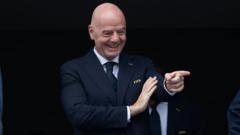
Infantino's Trump Connection Draws European Scrutiny Without Real Consequence
Gianni Infantino's relationship with prominent political figures, including recent interventions that have sparked Infantino Trump backlash across European football circles, continues to demonstrate the FIFA president's resilience despite mounting criticism. After a decade steering world football's governing body, the Italian-Swiss administrator has weathered numerous controversies that would have derailed most international leaders.
The European response to Infantino's political engagements reveals a fundamental disconnect between continental football leadership and the broader FIFA power structure. Despite vocal objections from federations across Europe, the mechanisms protecting the FIFA president remain intact, suggesting that ideological opposition alone carries limited weight in Zurich's corridors of power.
The Folarin Balogun Situation and Its Limited Political Impact
The Folarin Balogun controversy emerged as a flashpoint for those questioning Infantino's judgment and decision-making autonomy. The incident, which involved England's attacking midfielder and represented broader tensions surrounding player representation and national team selection, initially appeared to galvanize opposition forces within European football.
However, analysis of FIFA's internal dynamics reveals that such incidents, while generating headlines and diplomatic tension, lack the institutional support necessary to threaten Infantino's leadership position. European federations maintain significant influence within FIFA's governance structure, yet their collective action remains fragmented by competing national interests and economic dependencies on FIFA's financial distributions.
Why European Backlash Translates Into Limited Leverage
The gap between European outrage and practical consequences reflects FIFA's complex organizational architecture. Despite controlling substantial votes within FIFA Congress, European nations face competing pressures that complicate unified opposition to Infantino's continued leadership.
Financial considerations play a decisive role. UEFA member federations benefit substantially from FIFA's revenue distribution mechanisms, particularly through tournament broadcasting rights and World Cup revenue sharing. This economic interdependence creates reluctance among even critical voices to escalate confrontation beyond rhetorical gestures.
Additionally, geographic and political divisions within European football prevent the formation of cohesive voting blocs capable of presenting genuine electoral threats. While England, France, Germany, and Spain maintain substantial individual influence, their divergent interests regarding FIFA reforms mean that consensus-building proves exceptionally difficult.
Infantino's Institutional Advantages Remain Formidable
The FIFA president benefits from structural advantages that transcend individual controversies or regional criticism. His control over FIFA's administrative apparatus, combined with strategic positioning within international football politics, provides insulation from European pressure.
Support from confederations beyond Europe substantially outweighs European opposition numerically. African, Asian, and South American federations, recipients of considerable FIFA development funding and tournament revenue, maintain stronger incentives for supporting Infantino's continuity than European federations do for challenging it.
The Trump intervention aspect of recent criticism demonstrates how Infantino navigates between multiple political spheres while maintaining his position above direct partisan entanglement. By engaging with prominent international figures across ideological spectrums, he maintains flexibility and leverage that more traditionally constrained sports administrators lack.
Looking Forward: Limited Electoral Vulnerability
Recent developments suggest that Infantino faces minimal electoral vulnerability from European opposition alone. While the Folarin Balogun controversy and Trump-related criticism generate significant media attention and diplomatic complaints, these factors have not translated into coordinated institutional challenges to his presidency.
Future FIFA presidential elections will likely demonstrate that European federation concerns, while substantial in global football discourse, carry insufficient electoral weight to determine FIFA leadership outcomes. The mathematical reality of FIFA Congress voting, combined with Infantino's demonstrated skill at managing relationships across multiple confederations, suggests his political position remains stable.
The persistence of Infantino Trump backlash among European voices reflects legitimate governance concerns within international football. However, translating such concerns into electoral consequences requires institutional coordination and collective action that European federations have historically struggled to achieve on contentious FIFA issues.
The Broader Context of FIFA Leadership Resilience
Infantino's decade-long tenure has established precedent for presidential durability despite significant controversies. Unlike previous FIFA leaders whose scandals directly implicated them in corruption or fraud, criticism of Infantino tends toward policy disagreements and diplomatic style objections rather than allegations of personal misconduct.
This distinction proves crucial for electoral purposes. Federations can express disapproval of Infantino's Trump connections or his handling of the Folarin Balogun situation without mobilizing the institutional machinery necessary to remove him. Regional criticism, however vehement, does not automatically translate into grounds for serious electoral challenge under FIFA's constitutional framework.
The European backlash represents an important counterweight to unchecked FIFA presidential authority. However, its practical limitations on Infantino's political future suggest that vocal criticism will likely prove insufficient to alter his institutional position or influence FIFA's strategic direction in meaningful ways.