
Tech Leaders Reveal Top Skills to Learn in the AI Era Today
Discover what AI leaders like Sundar Pichai, Jensen Huang and Jack Clark recommend studying to succeed in the artificial intelligence age.
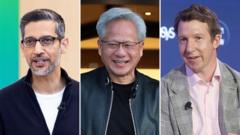
Tech Visionaries Share Their Career Guidance for the Artificial Intelligence Era
What to study in the AI age has become one of the most pressing questions for students and professionals worldwide. Leading technology executives have opened up about their perspectives on education and skill development, offering valuable insights into the competencies that will matter most in an increasingly AI-driven world. In exclusive conversations with the BBC, prominent figures from the tech industry have outlined their vision for preparing the next generation to thrive amid rapid technological transformation.
Sundar Pichai's Vision on AI Learning Paths
As the chief executive of Google and Alphabet, Sundar Pichai has emphasized the critical importance of understanding fundamentals while remaining adaptable to change. His guidance on what to study in the AI age centers on building strong mathematical foundations and computational thinking. Pichai believes that professionals need not necessarily become specialized AI researchers, but rather should develop a comprehensive understanding of how artificial intelligence systems work and their real-world applications.
The tech leader has highlighted that curiosity and the ability to learn continuously should be paramount qualities for anyone entering the workforce during this transformative period. He suggests that traditional subjects like mathematics, computer science, and liberal arts education provide essential scaffolding for navigating an AI-centric future. Pichai's recommendations extend beyond technical knowledge, emphasizing the importance of developing critical thinking skills and understanding the ethical implications of artificial intelligence technologies.
Jensen Huang's Perspective on Technical Expertise
Jensen Huang, the founder and CEO of NVIDIA, has taken a slightly different approach when discussing what to study in the AI age. His advice emphasizes the value of specialized technical training, particularly in areas directly related to artificial intelligence infrastructure and development. Huang has consistently advocated for deeper engagement with programming languages, data science, and machine learning frameworks that power modern AI systems.
According to Huang's insights, professionals should prioritize hands-on experience alongside theoretical knowledge. He encourages aspiring technologists to engage with practical projects, participate in open-source communities, and build portfolios that demonstrate real-world problem-solving abilities. Huang's philosophy reflects the rapidly evolving nature of AI, where demonstrated capability often matters more than formal credentials alone.
Jack Clark's Approach to Interdisciplinary Knowledge
Jack Clark, co-founder of Anthropic, brings another dimension to the conversation about what to study in the AI age. Clark advocates for a more interdisciplinary approach that combines technical AI knowledge with expertise in policy, ethics, and social sciences. His recommendations highlight the need for professionals who can bridge the gap between pure AI research and its broader societal implications.
Clark emphasizes that the future workforce needs individuals who understand not just how to build artificial intelligence systems, but also how to ensure they operate responsibly and beneficially for society. He suggests that students interested in AI should consider double majors or supplementary study in fields like philosophy, policy, economics, and social science. This multidisciplinary perspective reflects the growing recognition that AI's impact extends far beyond technical implementation.
Emerging Skills Required in an AI-Driven Economy
Beyond the specific recommendations from these industry leaders, broader patterns emerge when analyzing what to study in the AI age. The tech industry increasingly values professionals who can wear multiple hats and adapt to changing demands. Soft skills such as communication, collaboration, and creative problem-solving have gained prominence alongside technical competencies.
The consensus among these visionaries suggests that foundational knowledge in artificial intelligence, machine learning, and data science provides critical advantages. However, equally important are abilities to think critically, question assumptions, and consider complex implications of technological advancement. Students beginning their educational journeys today should recognize that flexibility and continuous learning will be essential traits throughout their careers.
Practical Steps for Students and Career Changers
For those seeking to act on what to study in the AI age, practical guidance from these tech leaders suggests several concrete steps. Building strong foundations in mathematics and computer science remains advisable, whether through traditional university programs or accelerated online courses. Additionally, engaging with real-world projects, internships, and mentorship opportunities can provide invaluable experience.
Both formal education and self-directed learning play vital roles in preparing for an AI-centric future. Students should consider pursuing certifications in specific AI tools and frameworks while simultaneously developing broader capabilities in areas like systems thinking, project management, and domain expertise relevant to their chosen fields.
The Evolving Landscape of Technology Education
The advice offered by these industry leaders reflects a rapidly evolving landscape where what to study in the AI age continues to shift based on technological advancement and market demands. Universities and educational institutions worldwide are updating curricula to better prepare students for this new reality, incorporating AI literacy into programs across disciplines.
The key takeaway from Pichai, Huang, Clark, and other industry leaders is that success in the age of artificial intelligence requires a balanced approach combining technical skills, critical thinking abilities, ethical awareness, and adaptive learning capabilities. Those who embrace continuous education and remain curious about the intersection of technology and society will be best positioned to thrive in tomorrow's opportunities.